
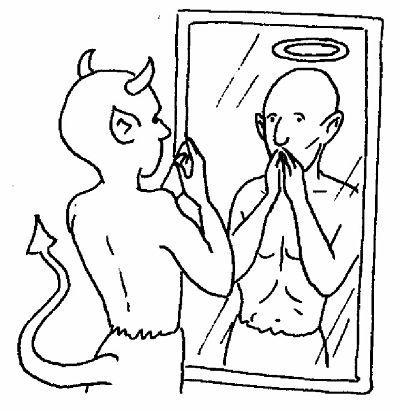
Let’s talk about that awkward moment when someone preaches about being honest but then turns around and does the opposite. Yep, we’re diving into the world of hypocrisy in our personal and professional circles, and trust me, it’s a wild ride! I was experiencing the same when I recently visited my home country. Then, I started carefully observing the pattern and realized it is not confined to a specific culture but prevalent everywhere. So, I started this rabbit hole to understand this a little better.
Keeping eyes wide open to spot:
First, Let’s sharpen our observation skills. Watch for those little inconsistencies between what people say and what they do. Whether at a family gathering or hanging out with friends, there’s bound to be some hypocrisy lurking around. Spot them and build some pattern for every individual.
Be a Hypocrisy Detective:
Okay, so you’ve spotted some shady behavior. So what? It’s time to wear a detective hat and figure out what’s happening. Maybe some family drama, societal pressure, or office politics are at play. Understanding where people come from can help navigate the situation like a boss.
Identify pattern
Trying to bucketize them is helping me identify how the same person behaves differently in different situations. I realized that I was also a hypocrite in several instances. This helped me to identify 2 high-level patterns. Unintentional or Intentional hypocrites.
In the Unintentional hypocrisy category, most individuals may not always recognize their own inconsistencies because they may rationalize their actions or lack the self-awareness to identify anomalies in their behavior. In 50-60% of instances, people fell into this category.
Intentional hypocrisy comes from motives such as seeking personal gain, avoiding accountability, or maintaining social status. I noticed that some individuals consistently use hypocrisy to manipulate or deceive others for their benefit. In 40-50% of instances, people fell into this category.
Keep it Real:
Do I need to call out the hypocrisy? Probably not. It is none of my business. However, occasionally, I was calling this out, which resulted in sour relationships. I realized I don’t want to start a family feud, lose friends, or sour professional relationships. Most of the time, I can ignore it and move on. In other instances, I can approach the conversation with empathy and understanding. After all, I, too, act like hypocrites occasionally.
Cultural Confusion, Anyone?
Living in South Asian culture means many cultural norms and traditions are thrown into the mix. It’s like trying to solve a puzzle with pieces from different sets. It is the demand of cultural complexity, so I started acknowledging and acting responsibly instead of losing sleep on it.
Spread the Love, Not the Drama:
I realized that I should be the voice of reason and support instead of fueling the fire. Offer a listening ear and some words of encouragement. We’re all in this together, trying to navigate the maze of hypocrisy and become better versions of ourselves.
Lead by Example:
Last but not least, lead by example. I firmly believe walking the talk is possible, and I can be true to myself. My friends, family, and colleagues will take notice and follow my lead. Who knows, I might start a revolution of authenticity!
Dealing with hypocrisy in personal or professional relationships doesn’t have to be a complex endeavor. Stay woke, and be truthful to your own authentic self.